


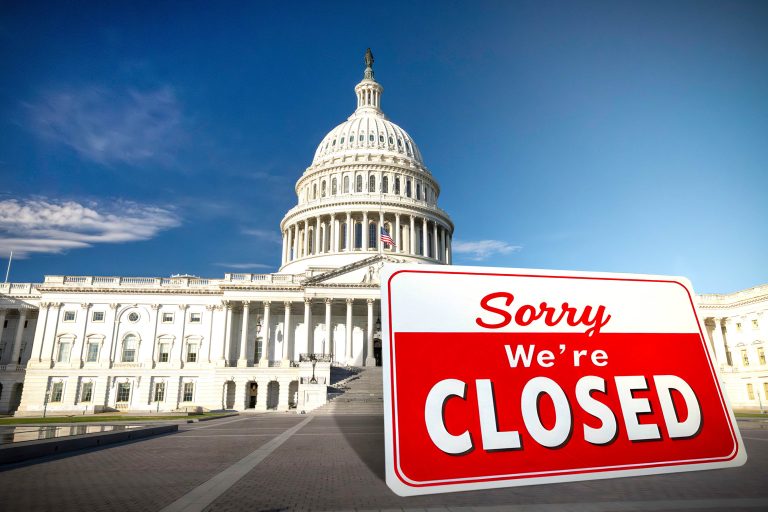
While airports across the country continue to see long TSA lines during the partial government shutdown, America’s top travel organizations have launched a campaign to support them.
Federal aviation workers faced their first empty paychecks this month, but the U.S. Travel Association has partnered with Airlines for America, the American Association of Airport Executives, and the American Hotel & Lodging Association to launch the “Pay Federal Aviation Workers” campaign. The new campaign hopes to motivate Americans to urge Congress to pass legislation ensuring essential federal aviation employees continue to be paid during government shutdowns.
The campaign official site reads: “Far too often in recent years, the aviation industry has been used as a political football during federal government shutdowns. The impacts are far reaching, cause billions of dollars in damages, and affect people across the travel ecosystem.”
Leaders from these travel associations are urging American citizens and leaders to support the passage of the Aviation Funding Solvency Act and the Aviation Funding Stability Act, which would ensure air traffic controllers are paid regardless of the government’s funding status. Leaders from these travel associations also support the Keep America Flying Act, which would provide the same protections to TSA officers.
“TSA officers screen nearly a billion passengers a year. With an average salary of around $35,000, these are workers who simply cannot afford to miss a paycheck,” said President and CEO of the U.S. Travel Association Geoff Freeman in a statement.
Todd Hauptli, President of the American Association of Airline Executives also supports the campaign. “These are people who work hard, and who are being forced in some cases to find second jobs or rely on donations to buy gas or groceries or meet basic needs,” he said.
The U.S. Travel Association indicates the airline industry is expecting 171 million passengers this spring, that’s 2.8 million passengers a day. In the fall, the shutdown cost the travel industry and related sectors $6.1 billion in losses, and affected six million travelers over its 43-day period.
